


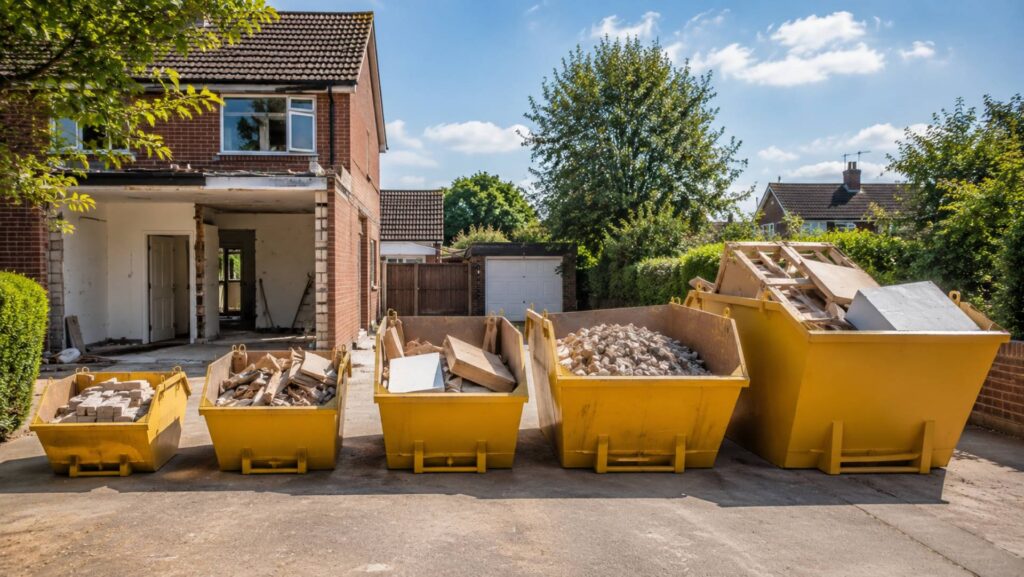
Choosing the correct skip size can keep a clearance, renovation or building project running smoothly. A skip that is too small may require a second collection, while an oversized container means paying for space you do not use.
When arranging skip hire St Albans, consider the type, weight and volume of waste your project will produce. You should also check the available space, access for the delivery vehicle and any local permit requirements before confirming your booking.
Understand Common Skip Sizes
Skip capacities are normally measured in cubic yards. Exact dimensions may vary between suppliers, so always check the measurements and loading restrictions.
Mini Skips
Mini skips generally hold around two to three cubic yards of waste. They are useful for small garden clearances, minor DIY work and decluttering a single room.
Their compact size makes them suitable for properties with limited driveway space. However, bulky furniture or bathroom fittings can fill them quickly.
Midi Skips
A four- or five-yard midi skip is suitable for moderate domestic projects. Typical uses include bathroom renovations, garden improvements, small kitchen refits and household clearances.
This size offers more capacity than a mini skip without occupying as much space as a traditional builders’ skip.
Builders’ Skips
Builders’ skips usually provide six to eight cubic yards of capacity. They are commonly used for building work, larger renovations and substantial home clearances.
An eight-yard skip can accommodate mixed construction waste, but restrictions may apply to dense materials. Soil, concrete, bricks and rubble can become extremely heavy, so ask the provider how much can be loaded safely.
Large Skips
Skips of ten, twelve or more cubic yards are intended primarily for bulky, lightweight waste from commercial sites or major property clearances. They may not be suitable for large quantities of soil or rubble because the vehicle’s legal weight limit could be exceeded.
Estimate Your Waste Volume
Before requesting skip hire St Albans, list the materials you expect to discard. Consider cabinets, furniture, packaging, timber, garden cuttings and bagged rubbish separately.
Try to estimate the volume after large items have been dismantled. Breaking down suitable furniture and flattening packaging can reduce wasted space, but materials should never be crushed or handled in a way that creates a safety risk.
If you are uncertain between two sizes, give the hire company a detailed description of your project. Photographs of the waste pile may help an experienced provider recommend an appropriate container.
Consider Access and Placement
A skip delivery vehicle needs sufficient width, turning room and overhead clearance. Check for parked cars, narrow gates, low branches, cables and weak surfaces before choosing a location.
Private driveways are often the most convenient option, although protective boards may be needed to reduce the risk of damage. Avoid covering utility access points, drains or areas needed by neighbours.
Placing a skip on a public road normally requires permission from the local authority. The hire company may arrange the permit, but fees and processing times should be confirmed in advance. Roadside skips may also require lamps, markings or safety barriers.
Avoid Overfilling the Skip
Waste must remain level with or below the top edge of the container. Items protruding above the sides can fall during transportation and create a serious road hazard.
An overfilled skip may be refused for collection, leaving you responsible for removing the excess. Do not use boards or doors to increase the height of the sides.
Certain items are also prohibited from general skips. These commonly include asbestos, batteries, gas cylinders, tyres, chemicals, liquids and electrical equipment. Plasterboard and mattresses may require separate arrangements or incur additional charges.
Know When to Seek Professional Advice
Contact the provider if your project involves unusually heavy waste, hazardous materials or uncertain quantities. Professional guidance is also valuable when access is restricted or the skip may need to stand on public land.
Ask for a written quotation that explains the hire period, weight limits, accepted materials, delivery, collection, permit fees and additional charges. Confirm that the operator is registered as a waste carrier and uses authorised disposal facilities.
Conclusion
The right skip size depends on more than the apparent amount of rubbish. By assessing the waste type, estimating volume, checking access and understanding loading rules, you can avoid unnecessary costs and keep your waste removal project safe and organised.